
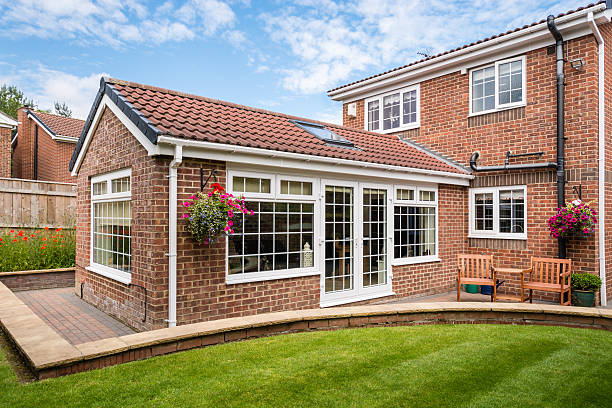
Many Dutch homes face the same problem: too little living space. Especially in urban areas, residents notice that the kitchen, living room, or dining area no longer fits their current lifestyle. A home extension is one of the most effective ways to add extra square meters, light, and comfort — without moving.
Why Choose an Extension?
An extension gives you the opportunity to rethink the layout of the ground floor. For example, you can enlarge the kitchen, create a living kitchen with a dining table, or design an additional seating area with a view of the garden. Large glass panels and sliding doors strengthen the connection between indoors and outdoors.
Extension Costs in 2025
The cost of an extension depends on size, foundation, insulation, glass, installations, and finishing. It is useful to work with ranges to get an initial idea of the budget. Based on recent projects in 2025, we can roughly categorize:
-
Compact basic extension: approximately €20,000 – €35,000
-
Medium-sized extension with good materials: approximately €35,000 – €60,000
-
Luxury custom extension: from €60,000 and up
These amounts usually include not only walls and roof but also structural calculations, insulation, electrical work, lighting, and connection to the existing home. Projects with a new kitchen, underfloor heating, or large glass panels naturally increase the total investment.
Prefab vs Custom Extension: What Fits Your Home?
When planning an extension, you will quickly face the choice of prefab vs custom extension. A prefab extension is mostly prepared in a factory and then installed in a short time. The main advantage is faster construction and often a lower price. The downside is less freedom regarding dimensions and detailing, which can be limiting for characteristic or 1930s homes.
A custom or tailor-made extension is built on-site and fully adapted to the existing architecture. This provides maximum freedom in design, materials, and layout. For terraced houses, corner houses, and older homes, this is often the best choice to create a natural integration. The trade-off is a longer construction period and higher extension costs, but the final result usually fits the rest of the home better.
Permit: When Is One Needed?
Whether you need a permit depends on the size of the extension, its position relative to the garden, and the existing buildings. At the rear, some extensions can be built permit-free, as long as you comply with zoning and building regulations. For greater depth, height, or structural adjustments, a building permit is usually required. Municipalities are increasingly setting requirements for insulation, daylight access, and energy performance.
Finishing: From Extra Space to Full Living Area
An extension is truly successful when the new space seamlessly integrates with the rest of the home. Materials, colors, and lighting must match well. In modern extensions, homeowners often choose:
-
large sliding or folding doors facing the garden, combined with lots of glass;
-
underfloor heating as the main heating system, so radiators can be removed and the space looks clean.
Additionally, high-quality insulation, attractive tile or wood-look flooring, and a lighting plan with spotlights or indirect lighting are often included. This makes the new space feel like a full part of the house, not just an “added section.”
Ready for More Space at Home?
Contact us for a free consultation. We can advise on design, permits, prefab vs custom extension, and guide you through the entire process — from the first sketch to turnkey delivery.

