
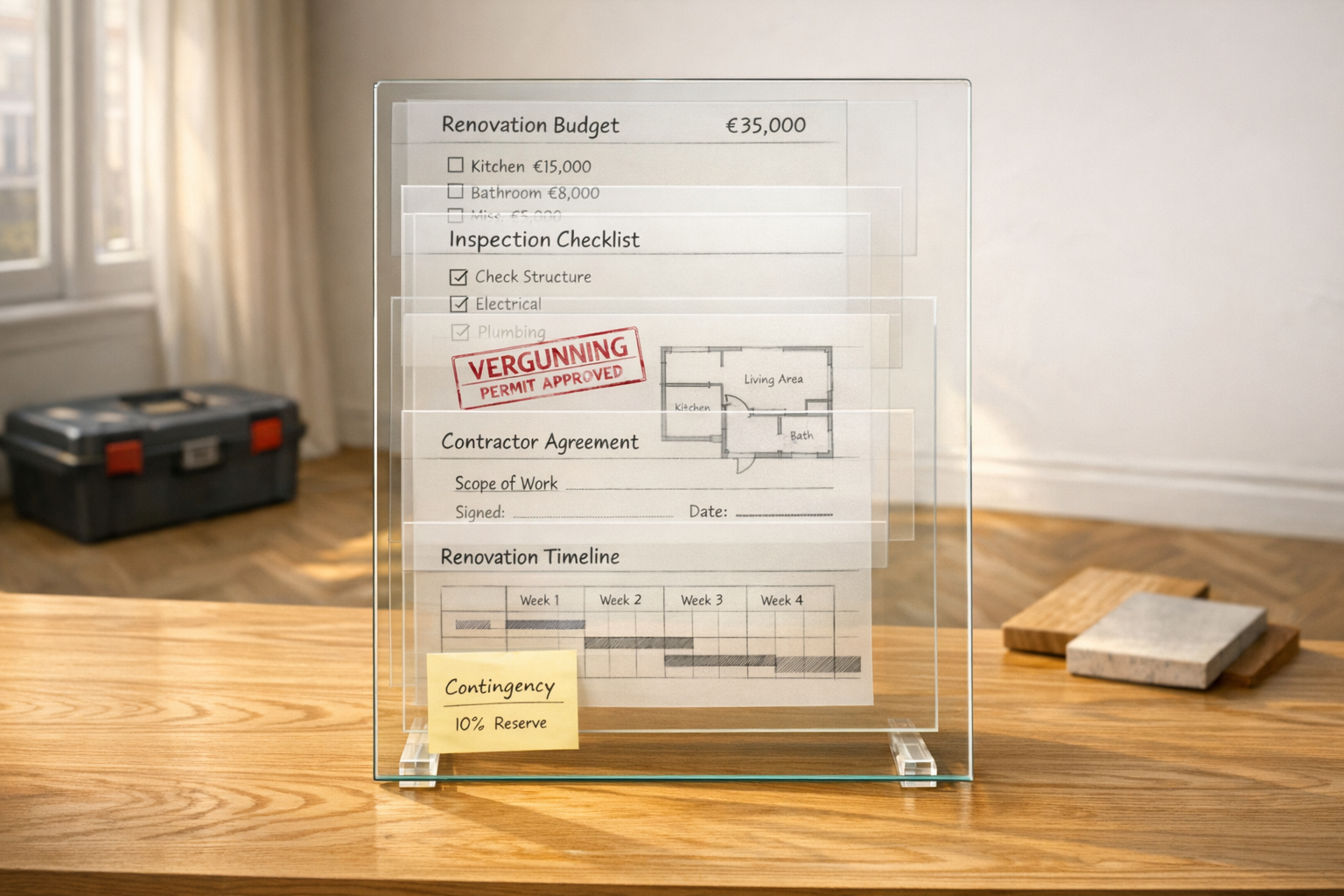
Planning a home renovation in the Netherlands can be complex, especially with strict regulations, potential hidden issues in older homes, and high costs. Here’s a quick breakdown of what you need to know:
- Budget: Renovation costs range from €1,000 to €1,200 per m². Always set aside 10–20% as a contingency for unexpected expenses.
- Permits: Structural or exterior changes likely require an omgevingsvergunning. Approval can take 8 weeks or longer.
- Inspections: Older homes may have issues like damp walls, asbestos, or outdated wiring. A thorough inspection is critical.
- Timeline: Renovations can take weeks to months. Order materials early to avoid delays, especially for items like windows and cabinets.
- Hiring Professionals: Interview multiple contractors, compare detailed quotes, and verify credentials before committing.
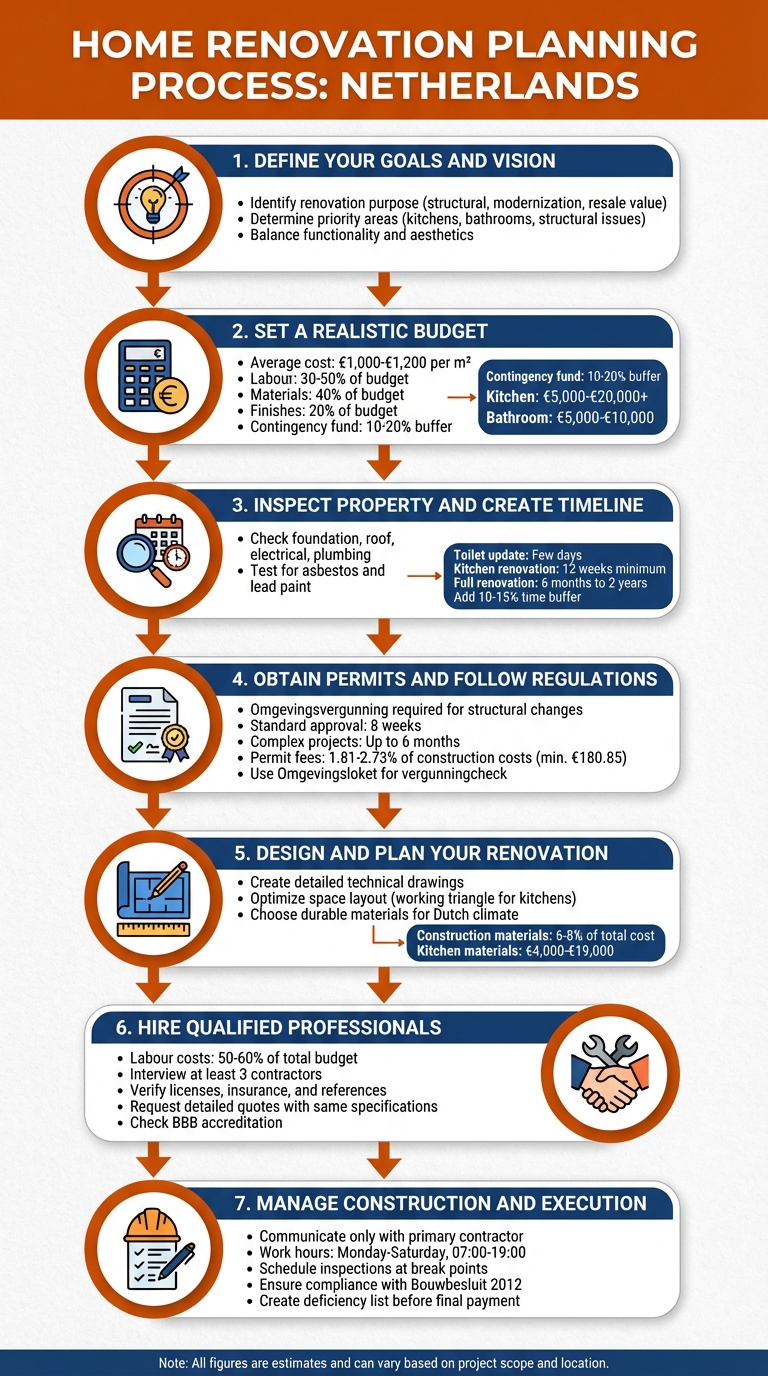
7 Essential Steps to Plan a Home Renovation in the Netherlands
Step 1: Define Your Goals and Vision
Before reaching out to contractors, take some time to define your renovation goals. Having a clear purpose will help you make better decisions when it comes to budgeting, choosing materials, and planning the overall process. Are you looking to fix structural issues, modernise certain areas, or increase your home’s resale value? Knowing this upfront will save you time and stress later.
Your personal lifestyle should guide these decisions. For instance, if you’re working from home more often, creating a functional home office might outweigh the need for a guest bedroom. Families with young kids might prioritise adding storage or redesigning layouts for easier supervision. If you’re planning to stay in your home long-term, consider features like wider doorways or a ground-floor bathroom to improve accessibility as you age. Michelle Gage, Founder and Creative Director of Michelle Gage Interiors, explains it perfectly:
"If you want your home to evoke a certain feeling, hire a designer. They consider what your dining room will feel like when you host family, what your home office needs to ensure your ultimate productivity."
Determine Priority Areas
Focus on the spaces that matter most in your daily life – kitchens and bathrooms tend to top this list. These high-traffic areas not only improve your quality of life but also offer great returns on investment. However, if your home inspection uncovers issues like foundation cracks, roof leaks, or outdated wiring, address these first. It’s better to fix structural problems before spending on cosmetic upgrades like new countertops or paint.
Your timeline also plays a role. If you plan to stay in your home for many years, it makes sense to personalise the space to fit your lifestyle. However, if you’re thinking about selling in the near future, stick to updates that appeal to a broader market, such as neutral finishes in kitchens and bathrooms. Once you’ve identified the key areas to focus on, think about how design can enhance both functionality and style.
Balance Functionality and Aesthetics
The best renovations strike a balance between practical needs and visual appeal. Take kitchens, for example. Before you pick out cabinet colours or worktop materials, plan the "working triangle" – the optimal placement of your refrigerator, stove, and sink for efficiency. While mood boards and social media can inspire your design choices, make sure they align with how you’ll actually use the space.
Jon Ward, Custom Builder at JW2 Building Co., offers this advice:
"Focus on your plans at the beginning and love them so you don’t find yourself second guessing them throughout the process."
Once your goals are clear and your budget is set (more on that in the next step), stick to the plan. Even small changes – like moving a window 30 centimetres – can throw off timelines and lead to unexpected costs. A solid plan from the start will keep your renovation on track.
sbb-itb-23466e3
Step 2: Set a Realistic Budget
A well-thought-out budget is the foundation of any successful home renovation. Without one, costs can quickly spiral out of control, leaving you with unexpected compromises. In the Netherlands, the average cost of a full house renovation ranges between €1,000 and €1,200 per square metre, depending on the scope and quality of materials. For a 100-square-metre home, you’re looking at approximately €100,000 to €120,000 for a complete overhaul.
To start, understand where your money will go. Typically, labour takes up 30–50%, materials account for 40%, and finishes around 20%. Don’t forget to add about 5% for waste disposal. If you’re renovating in Amsterdam, keep in mind that permit fees range from 1.25% (minimum €100) for smaller projects under €75,000 to 3.4% for larger projects up to €500,000.
One of the most crucial parts of your budget is the contingency fund. Stephanie Akkaoui Hughes, CEO of AKKA Architects, offers this advice:
"Try and allocate 20% as a buffer for contingencies, last-minute changes and unforeseen circumstances."
Older Dutch homes, in particular, may present challenges like damp walls, weak foundations, or outdated wiring. Setting aside 10% to 20% of your total budget ensures you’re prepared for surprises. Treat this fund as untouchable unless absolutely necessary. A clear, detailed budget will also help you keep expenses under control throughout the project.
Break Down the Costs
Before starting, break down your budget into specific categories: structural work, utilities (like plumbing and electrical), kitchen, flooring, finishes, and demolition. For example:
- A basic kitchen renovation typically costs between €5,000 and €10,000, while a luxury kitchen can exceed €20,000.
- Bathroom renovations usually range from €5,000 to €10,000, and even a small toilet renovation (2×1 metres) can cost €750 to €1,000.
Focus on the essentials first. Structural repairs, insulation, and fixing leaks should be your top priorities. High-end finishes, wine fridges, or designer taps can be added later if your budget allows. To ensure you’re getting the best deal, obtain itemised quotes from at least three contractors. This not only helps with cost comparisons but also highlights any inflated prices or unnecessary extras.
Don’t forget to account for hidden costs such as architect fees, structural calculations, and municipal inspections. If your renovation renders your home temporarily unliveable, you’ll also need to budget for alternative accommodation. Delivery fees for materials and BTW (VAT) can add up quickly, so factor those in too. For permit fees, check your local gemeente website, as these vary depending on the municipality.
Track and Adjust Expenses
Use a spreadsheet or a budgeting app to track every expense in real time. Small, overlooked extras can quickly add up and derail your plans. As Jordi Lippe-McGraw from Block Renovation puts it:
"A renovation budget isn’t just some annoying spreadsheet – it’s your renovation’s best friend. It keeps overspending at bay [and] prevents unexpected delays."
Review your budget weekly with your contractor and make adjustments as needed. For instance, you might opt for laminate flooring instead of hardwood to save costs or take on non-structural tasks like demolition and painting yourself, which could save you €5,000 to €10,000 in labour. Negotiating with suppliers for bulk discounts on materials like tiles or flooring can also help, as can asking contractors to suggest lower-cost alternatives that still achieve your desired look.
If your budget doesn’t cover everything at once, consider a phased approach. Start with high-priority areas like the kitchen or bathroom, and tackle other spaces as funds become available. This way, you can keep your project moving forward without taking on unnecessary debt or sacrificing quality where it truly counts.
Step 3: Inspect Your Property and Create a Timeline
After setting your goals and budget, the next step is to thoroughly inspect your property. This step is crucial for uncovering hidden issues that could derail your schedule or inflate costs. Older homes, in particular, tend to hide surprises beneath the surface. Skipping this process can lead to costly mistakes. B.J. Werzyn, Founder and CEO of West Shore Home, emphasizes:
"One of the biggest mistakes homeowners make before a major renovation is skipping a detailed inspection and measurement phase. Even a fraction of an inch can cause costly issues once installation begins."
A detailed inspection not only highlights potential challenges but also helps you craft a realistic timeline. This timeline will account for visible tasks and unexpected obstacles, giving you a solid foundation to coordinate contractors, order materials, and set expectations.
Conduct a Property Inspection
Start by examining your property for structural and functional issues. Look for cracks in the foundation, doors that don’t align properly, or uneven floors. Check the condition of joists, carrying beams, and load-bearing walls. If you suspect any structural problems or plan to remove walls, consulting a structural engineer is a wise move – they can diagnose issues and propose solutions.
Next, inspect your roof and exterior. Look for loose shingles, water stains on ceilings, or peeling paint caused by moisture. Check that gutters and siding are in good condition to prevent water damage. Inside, assess your electrical system to ensure it can handle modern appliances. Many older homes may need a complete rewiring to meet current standards. Similarly, examine plumbing and gas lines for leaks or outdated materials, ensuring they comply with building codes.
For older properties, it’s essential to test for asbestos and lead-based paint before starting demolition. These materials can pose significant health risks if disturbed. Additionally, inspect for moisture and mould, especially in basements, kitchens, and bathrooms. Use this opportunity to check insulation levels in the attic and floors, as well as the condition of HVAC systems. Renovation is the perfect time to upgrade utilities, ductwork, furnaces, and ventilation systems.
Key areas to inspect:
- Foundation: Cracks, sticking doors, uneven floors
- Roofing: Missing shingles, water stains, moss growth
- Plumbing: Low water pressure, slow drains, corroded pipes
- Electrical: Flickering lights, ungrounded outlets, frequent circuit trips
- Windows: Drafts, condensation between panes, rotted frames
Set Milestones and Deadlines
Once the inspection is complete, use your findings to map out a phased renovation timeline. The duration of renovations can vary widely depending on the scope of work. For example, updating a toilet might take only a few days, while a kitchen overhaul with new flooring could require a minimum of four weeks. A full kitchen renovation typically spans around 12 weeks, and large-scale projects like whole-home renovations can take anywhere from six months to two years. Jon Ward, Custom Builder at JW2 Building Co., notes:
"A simple kitchen renovation can take approximately 12 weeks, and right now cabinets and windows can take up to 26 weeks to arrive. If everything is ordered in advance, you can help prevent delays."
Break your project into clear phases: design, demolition, construction, mechanicals, and finishing. Set realistic deadlines for each phase and consult multiple local contractors – three to five is a good range – to establish a baseline timeline. Don’t forget to account for external factors like permits, which can take up to four months.
Supply chain delays are another factor to consider, especially for items like cabinets and windows, which may take up to 26 weeks to arrive. Ordering these materials early can save you from frustrating delays. Plan your work from the outside in – tackle exterior issues like roofing and window frames first to protect interior work, such as flooring or heating systems.
Finally, build a buffer of 10–15% in both time and budget to handle unexpected challenges. Once your design and timeline are locked in, resist the urge to make changes. Even small adjustments, like moving a window by 30 centimetres, can throw off the schedule and require engineering revisions.
Step 4: Obtain Permits and Follow Regulations
Navigating Dutch building regulations is a critical step to ensure your renovation stays on track without running into legal or administrative hurdles. After completing your inspection and timeline planning, it’s time to tackle the permits and regulations that apply to your project.
In the Netherlands, most renovation projects require an Omgevingsvergunning (Environment and Planning Permit). This system splits construction activities into two categories: technical building activity, which focuses on safety and sustainability, and environment plan activity, which deals with spatial aspects like height and function.
The approval process for standard permits typically takes 8 weeks, though in busier municipalities it could stretch to 12 weeks. For more complex projects that deviate from local zoning plans, approval may take as long as 6 months. Keep these timelines in mind when planning your renovation. Permit fees, known as leges, vary by municipality and are calculated as a percentage of your construction costs – ranging between 1.81% and 2.73%, with a minimum fee of around €180.85 in many areas.
Identify Required Permits
Not every renovation requires the same level of approval, so understanding what permits you need is key to avoiding unnecessary delays and costs. Structural changes, like removing a load-bearing wall, adding a roof extension, or converting a garage into a living space, all require permits. If your property is a listed monument or located in a protected conservation area, you’ll need approval for most exterior or interior changes. On the other hand, some minor works, such as installing solar panels (outside protected areas), adding a dormer window to the rear of your house, or putting up standard fences, are generally permit-free.
For standard houses (classified as consequence class 1), you’ll need to submit a notification and hire a qualified inspector to confirm technical compliance. Additionally, if your project involves more than 10 m³ of demolition waste or asbestos removal, you’ll need to file a separate demolition notification at least 4 weeks in advance. To simplify the process, use the online Omgevingsloket (Environment and Planning Portal) to perform a "vergunningcheck" and determine exactly which permits or notifications apply to your renovation.
Submit Applications Correctly
Start with a vooroverleg (pre-consultation) with your local municipality (gemeente) to ensure your plans align with local rules. This meeting also allows you to discuss any potential deviations from standard regulations. Make sure you have detailed construction drawings ready – consider hiring an architect or engineer for technical designs – and seek expert advice to strengthen your application.
When you’re ready, submit your application through DigiD (for individuals) or eHerkenning (for companies) via the Omgevingsloket. Once submitted, the municipality will publicly display your plans for neighbour review. To avoid objections, it’s a good idea to inform neighbours and nearby businesses about your project early on. Building goodwill before the formal announcement can save time and prevent delays. If you’re working with Grand Renovation, their team can help you navigate the documentation process and liaise with local authorities to keep things moving smoothly.
Step 5: Design and Plan Your Renovation
With your goals and budget clearly outlined, it’s time to refine both the look and functionality of your renovation. At this stage, you’ll focus on creating detailed technical drawings and finalizing material selections. This step ensures that every aspect of your project is well-defined before construction begins, helping to prevent delays and misunderstandings. A solid design plan serves as the critical link between your initial preparation and the hands-on work of the renovation.
Optimize Space and Layout
Accurate technical drawings are essential for translating your vision into reality. As Michelle Gage, Founder and Creative Director of Michelle Gage Interiors, puts it:
"Drawings are the key to communicating with those who are completing the labor in the house. If your designer is not capable of drafting technical documents, your project is already at a disadvantage."
For kitchens, consider using the working triangle principle – placing the refrigerator, stove, and sink in a triangular arrangement to improve workflow. During this phase, also map out the placement of outlets, thermostats, and air vents to avoid clashes with your design later on.
Precision is key. Even a small measurement error can lead to plumbing or fitting issues, especially in spaces like kitchens and bathrooms. If your home has underused areas, such as a formal living room, think about repurposing them into practical spaces like a home office. Custom built-ins, such as dining nooks, shelving, or closets, are excellent for maximizing storage while adding personality to compact or narrow floor plans.
Once you’ve nailed down the layout, shift your attention to selecting finishes that will bring your design concept to life.
Choose Materials and Finishes
Before placing any orders, decide on all finishes – including faucets, tiles, countertops, cabinets, and appliances. This approach ensures a cohesive design and helps avoid compatibility issues. In the Netherlands, construction materials typically make up 6% to 8% of the total renovation cost, while kitchen materials alone can range between €4,000 and €19,000, depending on size and level of customization.
Choose durable materials that suit the Dutch climate. For example, natural stone countertops and high-quality insulation with double glazing can improve both longevity and energy efficiency. Cabinet finishes like high-gloss lacquer or solid wood are popular choices for their durability and aesthetic appeal. Many homeowners are also incorporating BENG (Nearly Energy Neutral Building) standards to prioritize energy-efficient upgrades.
Sustainability is becoming a priority in Dutch renovations. Consider eco-friendly options like FSC-certified wood, recycled glass, or refurbished components to minimize environmental impact. Natural materials such as oak, beechwood, linen, and wool create a sense of warmth and align with the Netherlands’ preference for minimalist, functional design. Be sure to confirm lead times for materials early in the process to avoid unnecessary delays.
Step 6: Hire Qualified Professionals
Once your design and planning are complete, the next critical step is hiring the right professionals to bring your vision to life. These could include contractors, architects, or specialists, and their expertise will directly affect the quality, timeline, and cost of your project. Typically, labour accounts for 50% to 60% of the total renovation cost, so choosing wisely is crucial.
Start by interviewing at least three professionals to evaluate their skills, communication style, and project management approach. Construction consultant Deane Biermeier emphasizes the importance of this step:
"Find a contractor that allows you to feel comfortable when communicating with them."
Pay close attention to how they handle technical aspects of the job. For designers, insist on detailed 3D drawings and technical documentation to ensure your vision is clearly communicated to the construction team. Also, clarify who will manage the project on-site, as the person you meet during the interview may not be the one overseeing the daily work. Be sure to agree on how often you’ll receive updates and through which channels. This step ensures that every detail aligns with Dutch standards and keeps the project on track.
Request Quotes and Compare
Only request quotes after finalizing your design. Without a completed plan, contractors will have to estimate costs, leading to inconsistent quotes and potential disputes later. Provide all contractors with the same project specifications, including floor plans, material lists, and a detailed scope of work. This makes it easier to compare their proposals fairly.
When reviewing quotes, don’t just focus on the lowest price. Interior designer Claire Zinnecker offers this caution:
"I am very cautious when contractors have low estimates. It typically means that they will increase those fees with change orders or delays. Things cost what they cost, so don’t be fooled if someone’s prices are significantly lower than the rest."
Look closely at what each quote includes. Ensure all tasks, materials, and additional costs – like permits, delivery fees, and waste removal – are accounted for. Before signing any agreement, ask about the contractor’s process for handling change orders. This will help you avoid surprises if unexpected costs arise. Also, clarify their billing structure and payment schedule. In some cases, contractors cannot legally request more than one-third of the total cost upfront unless special materials are involved.
Verify Credentials and References
After narrowing down your options, take the time to verify each professional’s credentials. Check for a valid license, bonding, liability insurance, and workers’ compensation. Request copies of these documents to confirm their legitimacy. For architects in the Netherlands, you can verify their registration status through the Architects Registration Bureau to ensure they meet legal requirements.
Check the Better Business Bureau (BBB) directory to confirm their accreditation, which reflects ethical business practices and a track record of resolving complaints. Additionally, read online reviews to spot any recurring issues in client feedback.
Ask for a list of the three most recent projects they’ve completed and contact those homeowners directly. Inquire about their reliability, the quality of their work, adherence to schedules, and how they handled any problems or delays. These direct conversations often provide insights that won’t appear in formal portfolios or marketing materials.
| Verification Step | What to Check | Why It Matters |
|---|---|---|
| Licensing | Valid registration number for your region | Ensures compliance with legal standards |
| Insurance | General liability and workers’ compensation | Protects you from liability for accidents |
| References | Feedback from 3+ recent clients | Confirms reliability and work quality |
| Contract Details | Scope, timeline, payment terms, and warranties | Prevents disputes and scope creep |
Step 7: Manage Construction and Execution
When construction kicks off, your role shifts from planning to hands-on project management. This is the stage where all your preparation comes to life, and staying proactive is key. Take charge, address issues as they arise, and keep the momentum going to ensure the project stays on track.
One crucial rule: direct all questions, concerns, and changes exclusively to your primary contractor – not the subcontractors. Construction consultant Deane Biermeier puts it succinctly:
"Communicate only with the contractor about changes and concerns. Subcontractors don’t usually have the power to make changes on the fly and talking to them about it will only slow the project down."
Keep a written record of every change and agreement made on-site, especially those involving pricing, scope, or timelines. To avoid confusion, consider laminating a copy of your final plans and keeping it on-site. This ensures everyone works from the same blueprint and minimizes the risk of unexpected changes that could blow your budget or derail your schedule.
Clear, consistent communication is the backbone of a smooth construction phase.
Communicate Regularly with Contractors
Establish a fixed schedule for updates and choose a reliable communication channel from the outset. Quick responses to contractor inquiries can prevent unnecessary delays.
Language barriers can lead to misunderstandings, so confirm that your contractor is fluent in your preferred language, especially when discussing technical details or your vision for the project. Additionally, remember that standard construction work in the Netherlands is limited to Monday through Saturday, between 07:00 and 19:00. Work outside these hours requires a noise exemption (Geluidsontheffing bouw) from your local municipality.
Prepare contingency plans to handle delays or unexpected challenges without derailing the project. After the drywall phase, conduct a formal budget review to assess how much money remains for finishes and furnishings. This step ensures you don’t run out of funds before the project is complete.
Alongside consistent communication, thorough inspections are critical to ensure every phase of the project aligns with Dutch building standards.
Inspect Work and Ensure Compliance
Plan for key "break points" during construction – these are moments where specific work must be inspected before moving forward. Common checkpoints include structural work, plumbing rough-ins, electrical rough-ins, and framing. Walk through the site with your contractor at these stages to verify that completed work matches your design plans before releasing payment instalments.
Every aspect of the project must comply with the Bouwbesluit 2012, which outlines mandatory standards for safety, health, and energy efficiency in the Netherlands. Be prepared for local municipalities to conduct unannounced inspections to confirm the work adheres to your approved omgevingsvergunning (environmental permit). For added peace of mind, you might consider hiring an independent inspector to verify the contractor’s work against Dutch building codes before the warranty period begins.
| Inspection Phase | Critical Checkpoints | Dutch Regulation Context |
|---|---|---|
| Structural | Foundation, load-bearing walls, framing | Must meet Bouwbesluit 2012 requirements |
| Rough-ins | Plumbing, electrical, HVAC, mechanical systems | Inspections required before drywall installation |
| Energy/BENG | Insulation, window seals, solar panels, heat pumps | Must comply with Nearly Energy Neutral Building standards |
| Final | Safety features (e.g., railings, smoke detectors), finishes | Necessary for final municipal sign-off |
Double-check measurements during these inspections, especially in areas like kitchens and bathrooms where plumbing and fixture placement are critical. As B.J. Werzyn, Founder and CEO of West Shore Home, wisely notes:
"Even a fraction of an inch can cause costly issues once installation begins, especially in bathrooms and kitchens where plumbing and fit are critical."
As the project nears completion, create a deficiency list of items needing correction. This ensures all outstanding issues are addressed before making the final payment, leaving you satisfied with the quality of the finished work.
Conclusion
Planning a home renovation in the Netherlands involves much more than just having a vision – it requires a clear and structured approach. From setting a realistic budget to navigating permits, every step plays a crucial role in ensuring your project’s success. Early preparation and careful planning help avoid costly mistakes, while property inspections and permit approvals ensure your renovation complies with Dutch regulations like the Bouwbesluit 2012 and BENG energy standards. Skipping these steps could lead to significant issues, including structural problems, legal fines, or even demolition orders.
The secret to a smoother renovation process lies in detailed preparation. Finalize your designs, order materials well in advance, and maintain open communication with contractors to avoid delays. Long lead times for key materials and permits are common, so factoring these into your timeline is essential.
A strong contingency fund is also vital. With renovation costs in the Netherlands typically ranging from €1,000 to €1,200 per m² – and construction making up around 42% of the total budget – unexpected expenses like hidden structural damage or outdated electrical systems can quickly strain your finances. A buffer ensures you’re prepared for surprises that might arise once the walls come down.
Working with experienced professionals, scheduling inspections at critical stages, and adhering to Dutch building codes not only protect your investment but also boost your home’s resale value. Interior designer Claire Zinnecker captures the emotional side of renovations perfectly:
"What people don’t expect about a renovation is how hard it can be emotionally. You are dealing with so many decisions, so many changing targets… and you’re spending a lot of money."
FAQs
What hidden issues should I watch out for when renovating an older Dutch home?
When renovating older Dutch homes, there are two hidden challenges that frequently catch homeowners by surprise:
- Aging heating systems: Homes built before 2000 often come with boilers or radiators that appear to work fine in the summer but struggle – or even fail – once temperatures drop. This issue tends to surface only after renovations are underway, leaving homeowners scrambling to address it.
- Hidden structural issues: Problems like weakened wooden beams, cracks in the foundation, or compromised load-bearing walls aren’t always obvious during initial inspections. These issues often reveal themselves when walls are opened up or when additional weight is introduced during the renovation.
By keeping these potential pitfalls in mind, you can plan more effectively and reduce the risk of unexpected expenses during your renovation.
How do I make sure my renovation meets Dutch building regulations?
Before starting your renovation, it’s crucial to determine if you need an omgevingsvergunning (environment-and-planning permit). This permit is typically required for major structural changes, such as adding extensions, modifying your roof, or altering load-bearing walls. To clarify what’s needed, get in touch with your local municipality (gemeente). Make sure to confirm the requirements and submit your application well in advance of beginning any work.
For your application, you’ll need detailed architectural drawings and structural calculations that comply with the Besluit bouwwerken leefomgeving (Bbl) and your local omgevingsplan. Hiring a certified architect or engineer can be a smart move to ensure everything is accurate and meets safety standards, particularly for structural elements.
The permit application can be submitted through your municipality’s online portal. Be sure to include all necessary documents and keep a copy of the approved permit on site during the renovation. It’s also essential that contractors stick to the approved plans. To make the process smoother, use Dutch formats for budgets (e.g., € 10.000,00), dates (dd-mm-yyyy), and measurements (metres or centimetres) when communicating with local authorities and suppliers.
How can I handle unexpected costs during a home renovation?
To handle unexpected expenses during a home renovation, start by creating a realistic budget that includes a contingency reserve. Account for all expected costs, such as materials, labour, and permits, and add an extra 10% to 20% of the total budget as a safety net. For instance, if your renovation is estimated at €15,000, plan to set aside an additional €1,500 to €3,000 for unforeseen issues.
Here’s how to stay in control of your spending:
- Get multiple quotes from professionals to spot any major price differences early on.
- Document every cost and change in your contract to avoid unexpected charges later.
- Keep a close eye on expenses with a simple spreadsheet, ensuring you stick to your budget.
- Focus on priorities, so you can postpone less critical tasks if needed.
With careful planning and regular budget checks, you can reduce surprises and keep your renovation running smoothly without unnecessary financial strain.

