
A standard balcony renovation in the Netherlands costs between €650 and €2,500+, depending on the severity of structural damage and the chosen finish. Most projects take 1 to 4 working days. The price covers removing damaged concrete, treating corroded steel reinforcement, rebuilding the surface with two-component epoxy mortar, and applying a waterproof topcoat.
This guide breaks down exact costs by repair type, explains the step-by-step process professionals follow, covers your rights and obligations under VvE rules, and shows practical design ideas that work in Dutch weather conditions.
What Is Betonrot and Why Does It Matter?
Betonrot (concrete rot) is the most common structural problem on Dutch balconies. It is not surface-level wear – it is internal corrosion that weakens the load-bearing capacity of the entire slab.
How betonrot develops: carbon dioxide and rainwater penetrate the concrete surface over time. Once moisture reaches the steel reinforcement bars (wapening), those bars begin to rust. Rust expands up to seven times the original volume of the steel. That internal pressure cracks the concrete from the inside out, causing chunks to spall off and exposing more steel to moisture. Left untreated, the process accelerates and can compromise the structural safety of the balcony within a few years.
How to Identify Betonrot on Your Balcony
You do not need a professional to spot the early warning signs. Walk onto your balcony and check for these indicators:
- Rust stains – brown or reddish streaks running down the facade below the balcony edge.
- Exposed rebar – visible metal bars on the underside or along the edges, especially where concrete has chipped away.
- Hollow sounds – tap the floor or edges with a small hammer. A hollow ring instead of a solid thud suggests the concrete has separated from the steel underneath.
- Standing water – puddles that remain for hours after rain indicate the waterproof membrane has failed, meaning water is actively reaching the concrete core.
- Surface cracks – hairline cracks may seem cosmetic, but cracks wider than 0.3 mm typically allow moisture to penetrate to the reinforcement layer.
If you see two or more of these signs, the balcony needs professional assessment. Waiting increases both the cost and the safety risk – a crack repair at €400 today can turn into a full structural rebuild at €2,000+ within 18 months.
Common Causes of Balcony Damage in the Netherlands
Dutch weather creates a specific set of conditions that accelerate balcony deterioration faster than in most other European climates.
Freeze-thaw cycles. Water enters micro-cracks in autumn, freezes in winter, expands, and widens those cracks. The Netherlands averages 50–70 frost days per year, and each cycle pushes the damage deeper.
High humidity and prolonged rainfall. Average annual rainfall in the Netherlands is roughly 850 mm, spread across 130+ rainy days. Balconies without adequate drainage slopes or intact waterproof membranes absorb moisture continuously.
Carbonation of concrete. Over decades, CO₂ from the atmosphere slowly lowers the pH of the concrete. Once the alkaline protection around the steel rebar is neutralized, corrosion begins even without visible cracks. Most Dutch apartment buildings from the 1960s–1980s are now reaching the age where carbonation-triggered betonrot becomes common.
Original construction quality. Many post-war housing blocks were built with thinner concrete cover over the reinforcement than current standards require. The concrete cover in some 1970s flats is as thin as 15–20 mm, compared to the 30–35 mm minimum specified in modern Eurocode (EN 1992). This means corrosion starts earlier and progresses faster.
Failed or absent waterproofing. Some older balconies were finished with only tiles on a thin screed – no liquid membrane underneath. Once grout joints deteriorate, water passes straight through to the structural slab.
Balcony Renovation Cost Breakdown (2026 Estimates)
Pricing depends on three main factors: the extent of structural damage, whether scaffolding is required, and the finish you choose. Below is a transparent breakdown based on standard residential balconies (6–12 m²) in cities like Amsterdam, Rotterdam, The Hague, and Utrecht.
Structural Repair Costs
| Service | Estimated Price | What Is Included |
| Minor crack sealing and surface repair | €69 – €95 per hour | Cleaning, routing out surface cracks up to 0.5 mm, applying waterproof sealant |
| Full betonrot repair (moderate damage) | €650 – €1,550 per project | Chipping away damaged concrete, wire-brushing corroded rebar, applying anti-corrosion primer, rebuilding with two-component epoxy mortar |
| Severe betonrot repair (deep corrosion, rebar replacement) | €1,500 – €2,500+ per project | Same as above, plus partial rebar replacement, formwork for structural rebuilding, extended curing time |
| Betonrot repair per m² | €90 – €300 per m² | Price varies based on depth of damage and accessibility |
| Professional inspection and assessment | Free – €150 | Visual inspection, tap testing, photographic damage report. Grand Renovation provides this at no cost |
Waterproofing and Protective Coating
| Service | Estimated Price | What Is Included |
| Polyurethane liquid membrane | €600 – €1,200 per balcony | Seamless, UV-resistant waterproof layer applied over the repaired surface. Standard durability: 10–15 years |
| Polyurea coating | €800 – €1,500 per balcony | Faster curing (walkable within 6–8 hours), higher elasticity than polyurethane. Suitable for balconies with heavy thermal movement |
| Epoxy primer + topcoat system | €500 – €900 per balcony | Two-layer system: epoxy base for adhesion, polyurethane topcoat for UV protection. Cost-effective for smaller balconies |
Access and Scaffolding
| Service | Estimated Price | Notes |
| Ground floor / first floor (no scaffolding) | €0 | Direct access – no additional cost |
| Scaffolding (2nd floor and above) | €300 – €800+ | Required to comply with Dutch Arbowet safety regulations. Price depends on height and building access |
| Aerial work platform (hoogwerker) | €200 – €500 per day | Alternative to scaffolding for single-day repairs on higher floors |
Decorative Finishing
| Finish Type | Estimated Price | Characteristics |
| Seamless resin floor | Included in coating cost – €400 extra for decorative finish | Doubles as waterproof membrane and final surface. Available in grey, anthracite, sand, and custom colors |
| Composite decking | €80 – €120 per m² (materials + installation) | Rot-resistant, low maintenance. Raised profile allows water drainage underneath. Warm wood-look appearance |
| Outdoor ceramic tiles | €60 – €100 per m² (materials + installation) | Durable and classic. Requires proper waterproof membrane underneath to prevent frost damage |
| Natural hardwood decking | €100 – €160 per m² | Requires annual treatment with wood oil. Not recommended for north-facing balconies with persistent shade and moisture |
All prices include labour and are inclusive of 21% BTW. Final cost depends on total area, accessibility, material choices, and the condition of the existing structure.
What Does a Typical Balcony Renovation Cost in Total?
For a standard apartment balcony of approximately 8 m²:
- Light repair (crack sealing + new waterproof coating): €800 – €1,400
- Moderate betonrot repair (structural repair + waterproofing + basic finish): €1,200 – €2,200
- Full renovation (severe betonrot + scaffolding + decorative finish): €2,000 – €3,500+
How We Repair a Balcony: Step-by-Step Process
Understanding the repair process helps you evaluate contractor quotes and set realistic expectations. Here is the sequence our team follows on a standard betonrot repair:
Step 1 – On-Site Inspection and Damage Assessment
A specialist visits your property, inspects the balcony visually and with tap testing, and documents the damage with photographs. For VvE buildings, this report can be submitted directly to the VvE board. This step is free of charge.
Step 2 – Surface Preparation
All loose, cracked, or hollow-sounding concrete is removed using a chisel hammer. The goal is to expose the full extent of the corrosion – sometimes the damage runs deeper than what is visible from the surface. Any deteriorated concrete around the rebar must be removed until solid, sound material is reached on all sides.
Step 3 – Steel Treatment
Exposed reinforcement bars are wire-brushed or sandblasted to remove all rust. Once clean, the steel is coated with a zinc-based or epoxy-based anti-corrosion primer. This primer restores the protective layer that the original concrete provided. If sections of rebar have corroded beyond 30% of their original diameter, they are cut out and new reinforcement is welded in place.
Step 4 – Concrete Rebuilding
Two-component polymer-modified repair mortar (PCC mortar, compliant with EN 1504-3) is applied in layers to rebuild the damaged area to its original profile. For deeper repairs (more than 30 mm), formwork may be used to ensure proper compaction. Each layer is allowed to set before the next is applied.
Step 5 – Waterproof Membrane Application
After the repair mortar has cured for 24–48 hours, a seamless liquid waterproof membrane is applied over the entire balcony surface, including edges and wall-to-floor transitions. This membrane prevents future water ingress into the repaired concrete. Common options are polyurethane (standard) or polyurea (faster curing).
Step 6 – Decorative Finishing
Depending on your preference, the final surface is either the membrane itself (available in colours), a resin floor, composite decking, or tiles. Decking and tiles are installed over the membrane with spacers to allow drainage.
Step 7 – Final Inspection and Handover
The completed work is inspected, documented, and handed over with a written guarantee.
Timeline: most residential balcony repairs are completed within 1–3 working days. Full renovations with scaffolding and decorative finishes may take 3–5 days.
Balcony Repair vs. Full Replacement: When Is Each Needed?
Not every damaged balcony needs a complete overhaul. The right approach depends on the extent of structural damage.
Repair is sufficient when:
- Betonrot is localized to a few specific areas (edges, corners, underside).
- The reinforcement is corroded but structurally intact (less than 30% section loss).
- The overall slab thickness and drainage slope are adequate.
- The existing waterproof membrane can be fully replaced without removing the slab.
Full replacement is needed when:
- Rebar corrosion is widespread across more than 50% of the slab.
- The slab has lost structural capacity – visible deflection, large-scale spalling, or chunks falling off.
- The original concrete cover is too thin (under 15 mm) to support long-term repair.
- A structural engineer determines that the load-bearing capacity no longer meets current safety requirements.
Full replacement (removing the old slab and casting a new one) typically costs €3,000 – €8,000+ and requires municipal permits plus structural engineering calculations. This is significantly more expensive than repair, which is why early detection saves money.
Navigating VvE Rules for Balcony Renovation
If you own an apartment in a shared building, your balcony is almost certainly classified as part of the building’s outer shell. This means it falls under the jurisdiction of the Vereniging van Eigenaren (VvE) – the Homeowners Association.
Who Pays for the Repair?
In most Dutch VvE splitsingsaktes (deeds of division), the structural concrete and the primary waterproofing layer are the VvE’s responsibility. If your balcony has betonrot, the repair should be covered by the VvE’s reserve fund (reservefonds). However, cosmetic upgrades – tiles, decking, planters, furniture – are typically the private owner’s expense.
This distinction matters financially. A €1,500 betonrot repair paid from the VvE fund is different from a €1,500 bill sent to you personally. Check your splitsingsakte or ask the property manager (beheerder) before commissioning any work privately.
How to Get Approval
1. Get a professional inspection. Do not start work on your own. A formal photographic damage report from a certified contractor carries weight with VvE boards. Grand Renovation provides these reports at no charge and formats them for VvE submission.
2. Submit the report to the VvE board. Present the inspection report along with a repair proposal and cost estimate. Most VvE boards meet quarterly, so submit well in advance. If the situation is urgent (active spalling creating a safety risk for people below), the board can authorize emergency repairs outside the regular meeting cycle.
3. Check municipal permit requirements. Standard betonrot repair and waterproofing do not require a municipal permit (omgevingsvergunning). However, if you plan to extend the balcony, add a glass enclosure, or change the historical facade, you will need an omgevingsvergunning. Processing time: 8 weeks from submission.
Typical VvE approval timeline: 4–8 weeks from submission to approval, depending on meeting schedule and board responsiveness. Plan accordingly, especially if you want the work done before winter.
How to Save on Balcony Renovation Costs
Act early
The single most effective way to reduce costs is catching damage early. A small crack repair (€300–€500) is a fraction of the cost of a full structural rebuild (€2,000+). Inspect your balcony annually – ideally in early spring after the winter freeze-thaw cycles.
Schedule during off-peak months
Spring and early autumn are peak seasons for exterior renovation work. Scheduling your repair in late autumn or early winter (when temperatures are still above 5°C, which is required for mortar curing) may result in lower quotes due to reduced demand.
Plan during weekdays
Contractors charge weekend surcharges, typically 25–50% above standard rates. Scheduling repairs Monday through Friday avoids this premium.
Combine with VvE building maintenance
If your VvE is planning facade maintenance, gutter cleaning, or general concrete inspection, bundling your balcony repair into the same project can significantly reduce scaffolding costs. Scaffolding is often the most expensive single line item for upper-floor balconies.
Get multiple quotes – but compare scope, not just price
A €900 quote that includes only mortar repair and a €1,400 quote that includes mortar repair, anti-corrosion treatment, and a full waterproof membrane are not comparable. The cheaper option may leave you with recurring water damage within 2–3 years. Always ask what materials are specified (EN 1504-compliant mortar, type of waterproofing), and whether the quote includes scaffolding and cleanup.
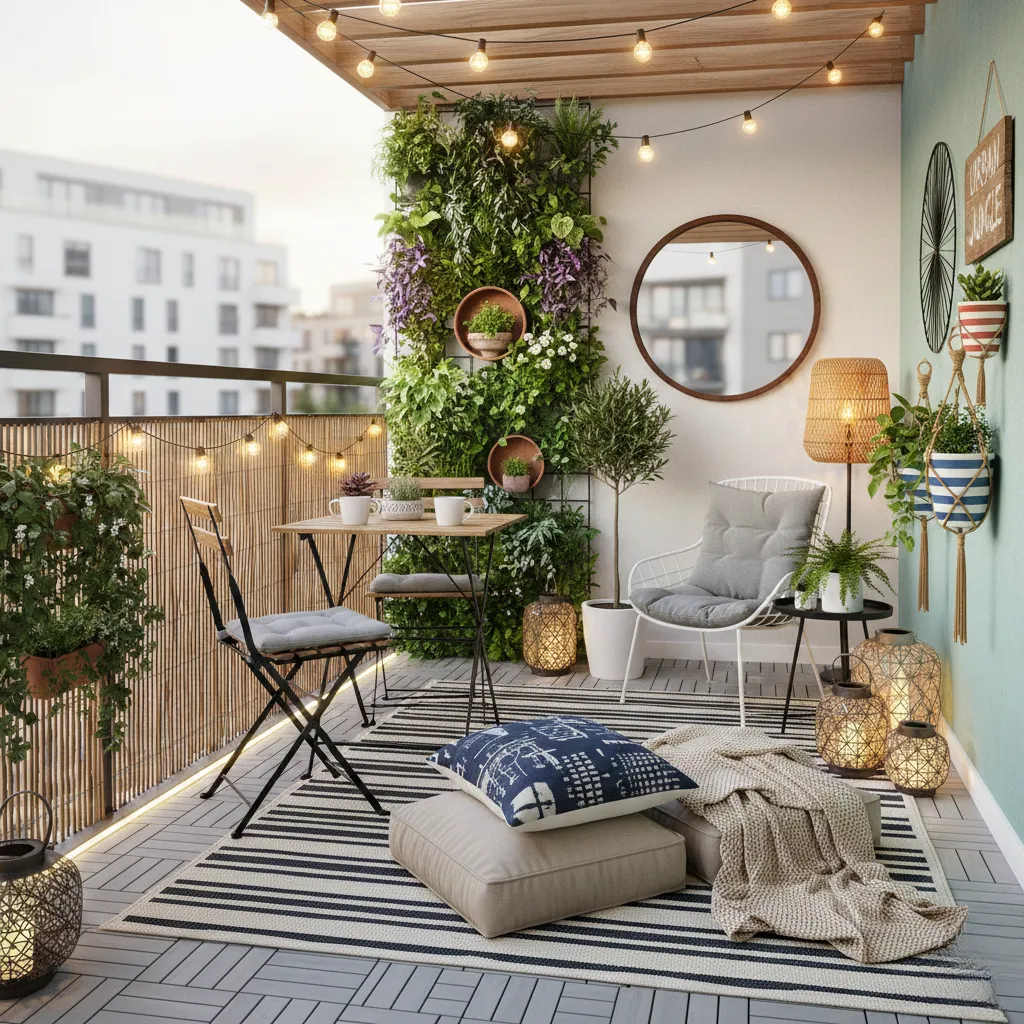
Modern Balcony Renovation Ideas That Work in Dutch Weather
Once the structural repair and waterproofing are complete, your balcony is ready for a design upgrade. Outdoor space is valuable in Dutch cities – even 6 m² can function as an extension of your living room if designed well.
Seamless Resin Floors
A resin floor acts as both the final decorative surface and an additional waterproof layer. It is applied as a liquid and cures into a seamless, jointless surface with no grout lines where water can penetrate. Available in a range of colours (anthracite and concrete grey are popular in modern Dutch apartments). The surface is easy to clean with a mop and requires no annual maintenance. Cost: included in waterproofing, or +€300–€400 for a decorative colour finish.
Composite Decking
Composite (WPC – wood-plastic composite) decking gives the warmth and texture of natural wood without the rot risk. The boards are installed on a raised subframe, which creates a drainage gap between the deck and the waterproof membrane. This setup means rainwater runs off the deck surface and drains away underneath. Composite does not need oiling, staining, or sanding. It handles full sun and frost without warping. Cost: €80–€120 per m² installed.
Frameless Glass Balustrades
Replacing a heavy, rusted steel railing with laminated safety glass immediately changes the visual character of the facade. Glass balustrades allow maximum daylight into the apartment and make the balcony feel larger. In the Netherlands, balustrade glass must meet NEN 2608 standards for wind load and impact resistance. Cost: €200–€400 per running meter, installed.
Integrated Fiberglass Planter Boxes
Custom-built fiberglass planters can be designed to sit along the balcony edges or attach to the railing. Fiberglass is lightweight (critical for load limits on older balconies), frost-resistant, and available in any colour. Choose drought-tolerant plants like lavender, sedum, or ornamental grasses that handle Dutch wind and rain without constant care. Cost: €150–€400 per planter, depending on size.
Outdoor Lighting
Waterproof LED strip lighting along the balcony edges or underneath the railing creates usable evening space from April through October. Solar-powered options require no wiring. Cost: €50–€200 for a DIY solar strip kit; €300–€600 for a hardwired installation by an electrician.
See the Work: Balcony Renovation in Practice
We document every balcony renovation with before-and-after photography and, where possible, video. Our project gallery shows the full process: stripping damaged concrete, treating the reinforcement, applying fresh mortar, and finishing with modern materials. These are not stock photos – they are actual Dutch balconies we have repaired.
Frequently Asked Questions
How much does balcony renovation cost in the Netherlands?
A standard balcony renovation costs between €650 and €2,500, depending on the extent of betonrot damage, whether scaffolding is needed, and the chosen finish. Minor crack repairs start at €69–€95 per hour. Full structural rebuilds with decorative finishing can exceed €3,000 for larger or heavily damaged balconies.
What is betonrot (concrete rot)?
Betonrot is the corrosion-driven degradation of reinforced concrete. Moisture and CO₂ penetrate the concrete, reach the embedded steel reinforcement bars, and cause them to rust. Because rust expands to roughly seven times the volume of the original steel, it cracks and breaks the surrounding concrete from the inside. Betonrot is especially common in Dutch apartment buildings built between 1960 and 1985, where concrete cover over the rebar was often thinner than current standards.
Can I repair betonrot myself?
No. Betonrot repair requires removing all compromised concrete, fully cleaning and chemically treating the corroded steel, and rebuilding with polymer-modified mortar compliant with EN 1504. If rust is not completely neutralized and sealed with professional-grade anti-corrosion primers, it continues to destroy the new concrete from the inside within months. In the Netherlands, this type of work is typically performed by VBR-certified concrete repair specialists.
Who pays for balcony repair in a VvE building?
In most VvE splitsingsaktes, the structural concrete and primary waterproofing of a balcony belong to the VvE and should be funded from the VvE’s reserve fund. Cosmetic finishes – tiles, decking, planters – are usually the private owner’s responsibility. Check your specific splitsingsakte or consult your property manager (beheerder) for your building’s arrangement.
Do I need a permit for balcony renovation?
Standard betonrot repair, waterproofing, and cosmetic finishing do not require a municipal permit (omgevingsvergunning). However, structural modifications (extending the balcony, adding a glass enclosure) or changes to a historically protected facade do require a permit. Processing time is 8 weeks from the date of application via the Omgevingsloket.
How long does a balcony renovation take?
Most repairs take 1–3 working days. The noisiest phase – chipping away damaged concrete – typically lasts only a few hours on the first day. Repair mortar needs 24–48 hours to cure depending on humidity and temperature. Polyurethane topcoats are walkable within 12–24 hours after application. Full renovations with scaffolding setup and decorative finishing may take 3–5 days total.
What is the difference between polyurethane and polyurea waterproofing?
Polyurethane is the standard choice: it offers good UV resistance, flexibility, and a 10–15 year lifespan. It cures in 12–24 hours and costs less. Polyurea cures significantly faster (walkable in 6–8 hours), has higher elasticity (better for balconies with wide thermal expansion), and is more resistant to chemical exposure. Polyurea costs roughly 30–40% more than polyurethane. For most residential balconies, polyurethane provides sufficient protection.
Can I renovate my balcony in winter?
Two-component repair mortar requires a minimum ambient temperature of 5°C to cure properly. In the Netherlands, this typically limits outdoor concrete repair work to March through November. Waterproof coatings have similar temperature requirements and should not be applied during rain or when rain is expected within 6 hours. If your balcony has a safety-critical issue during winter, temporary measures (tarping, emergency sealant) can be applied until spring.
How often should I re-coat my balcony?
A professionally applied polyurethane waterproof membrane typically lasts 10–15 years before it needs reapplication. Factors that shorten this lifespan include heavy foot traffic, furniture dragging, standing water due to poor drainage, and direct south-facing sun exposure. Annual visual inspection (checking for blisters, peeling, or cracks in the coating) helps catch deterioration early.
Do I need scaffolding for my balcony renovation?
Under Dutch Arbowet (Working Conditions Act) regulations, work at heights above 2.5 meters generally requires fall protection – either scaffolding or a secured aerial work platform (hoogwerker). For ground-floor and first-floor balconies, scaffolding is usually not needed. For second-floor and above, budget €300–€800+ for scaffolding or €200–€500 per day for a hoogwerker.
Ready to Fix Your Balcony?
Grand Renovation has completed over 200 renovation projects across the Netherlands, from Amsterdam canal houses to modern apartment complexes in Rotterdam and Utrecht. We provide free on-site balcony inspections, deliver photographic damage reports formatted for VvE submission, and work to fixed-price quotes with no hidden costs.

